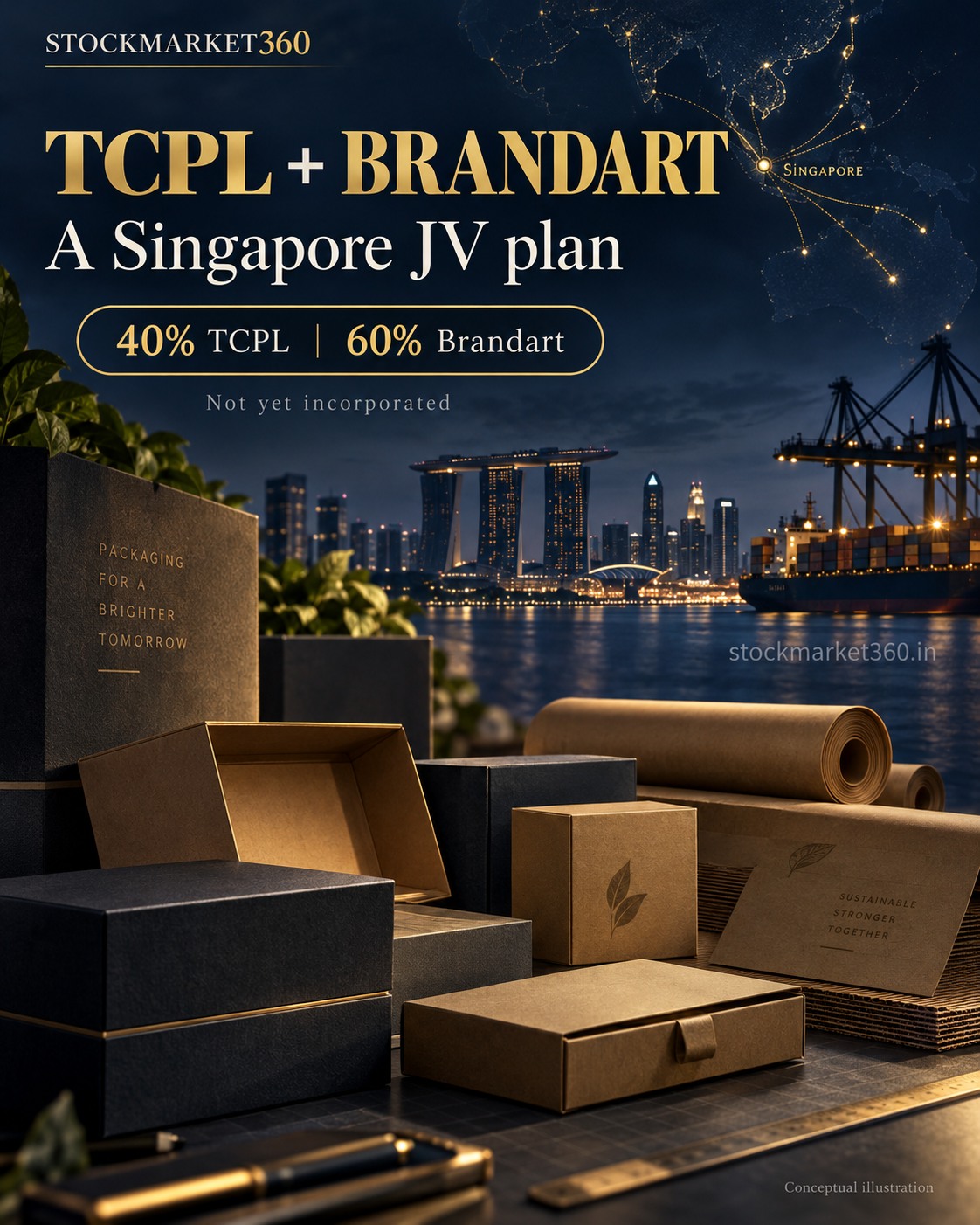
A signed agreement is now in place. The Singapore company it would create is not. That distinction sits at the heart of TCPL Packaging’s proposed partnership with Italy’s Brandart, disclosed to the exchanges on November 17.
The two packaging businesses have agreed to explore opportunities across the Asia-Pacific region through a new Singapore company. TCPL is to own 40%, with Brandart holding the other 60%. But investors looking for a deal value, a committed project budget or an earnings contribution will have to wait: those numbers have not been disclosed.
The pact is signed. The company comes next.
TCPL’s regulatory filing says the venture will use a Singapore private company limited by shares. At the time of the disclosure, that company had neither been incorporated nor given a final name. Its formation requires the applicable Singapore registration process.
The proposed funding is in cash, but the amount TCPL will invest is still to be decided. The announcement therefore establishes an agreed ownership structure and a framework for working together, rather than a completed capital deployment.
A minority stake with specified governance rights
The 40:60 split also runs through the proposed board: TCPL can nominate two directors, while Brandart can nominate three. The agreement includes provisions covering reserved matters, a share-transfer lock-in, funding and exit arrangements.
Those details matter because a 40% economic interest is not the same as majority ownership. Equally, the director count alone does not reveal how every important decision will be taken. The disclosure refers to reserved matters without setting out their full commercial workings.
What each side is bringing
TCPL describes the fit as its packaging-manufacturing experience alongside Brandart’s premium-packaging, design and customer capabilities. Brandart serves customers across several sectors, including fashion, beauty and hospitality, according to the accompanying company release.
That is the commercial rationale, not evidence of an order already won. Neither filing identifies a new customer contract, a revenue target or a scheduled earnings contribution for the venture. Turning a regional opportunity into business will depend on what the partners actually select and execute.
The next disclosures carry the numbers
The useful checkpoints are incorporation, the agreed investment and any concrete projects that follow. TCPL says it will report material developments. It also says the partners are independent entities and the agreement is not a related-party transaction for TCPL at entry; the venture itself becomes a related party after incorporation.
The takeaway: a defined international partnership is a real step, but a signed framework should not be counted as booked sales or immediate profit. For now, the ownership percentages are known. The capital commitment and commercial outcome are not.
Sources: TCPL Packaging’s November 17 exchange disclosure and company release. The artwork is an original conceptual illustration, not a photograph of the proposed venture. This article explains a corporate disclosure and is not an investment recommendation.