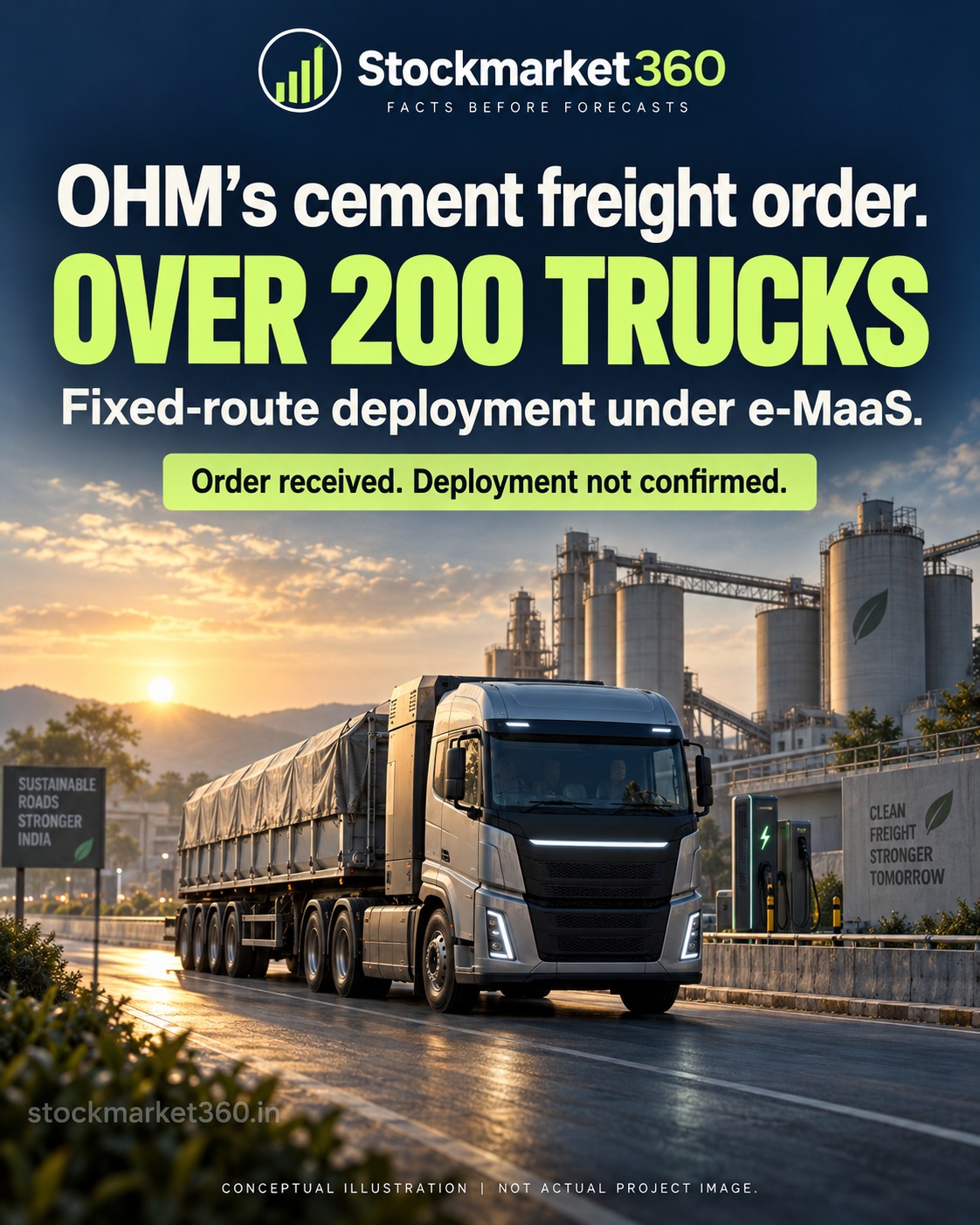
OHM Mobility has received an order to deploy more than 200 trucks for cement distribution on fixed routes under an e-MaaS model, Ashok Leyland’s management said on its November 16, 2026 earnings call. The transcript, filed on November 20, describes a deployment mandate, not confirmation that those trucks have already entered service.
The distinction matters when reading the headline number. It is a count of trucks covered by the order described by management. It is not a disclosed rupee order value, a delivery tally or a quantified earnings contribution.
What the company has actually disclosed
The statement identifies OHM as the entity receiving the order, cement distribution as the application and fixed routes as the operating arrangement. Management describes the model as e-MaaS, or electric mobility as a service.
The transcript does not identify the cement customer, disclose the contract value or provide a deployment schedule for this mandate. It also does not set out truck specifications, route distances, charging arrangements or the economics of the individual contract. Those gaps should remain gaps rather than being filled with an assumed selling price per vehicle.
Keep three different fleet numbers separate
OHM’s existing operating fleet had increased to around 2,100 electric buses, management said. That is an operating bus-fleet figure. The more-than-200-truck mandate is a separate freight order and should not be presented as an addition already operating within that bus fleet.
Switch Mobility India’s figures are separate again: 439 electric buses and 732 electric light commercial vehicles delivered during the first half of FY27, with an electric-bus order book of approximately 2,800 at the end of September 2026. Deliveries, an operating fleet and an order book measure different things. Combining them into a single vehicle-delivery total would misstate the disclosure.
Investment is not the order’s revenue
Ashok Leyland also reported Rs150 crore invested in OHM during the second quarter. That is funding into the subsidiary, not a stated value for this cement-transport contract. The call does not connect that entire investment to the truck mandate or disclose the mandate’s profit margin.
This is a narrow operating update, not a clean bill of health for the whole group. Elsewhere in the same call, management discussed discrepancies in Hinduja Leyland Finance’s underlying loan transactions and balances, an auditor disclaimer and a review whose financial impact had not been determined. The freight order does not answer those separate issues.
The next useful evidence would be a company disclosure on deployment, customer scope or contract economics. Until then, the supported conclusion is an order for more than 200 fixed-route cement-distribution trucks under e-MaaS, not completed deployment or booked profit.
Source: Ashok Leyland’s November 20, 2026 filing of its November 16 earnings-call transcript.
The poster is an original conceptual illustration, not an actual vehicle or project photograph. This report explains a company disclosure and is not an investment recommendation.
Follow Stockmarket360
More company news and market explainers: stockmarket360.in. Follow @stockmarket360official on Telegram for updates.